Issue date: 22nd December, 2025
AI and Education in 2026
Lead Story
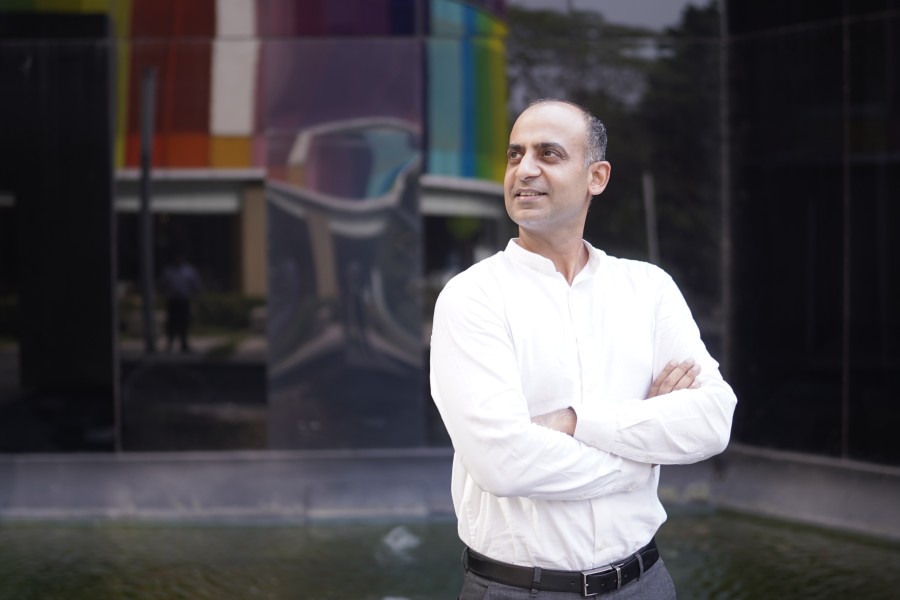
Dr. Rahul Kapoor is the Founder and Director of Turnip Innovations.
AI and Education in 2026
This is Part 1 of my post on Turnip's Year in Review 2025. Part 2 covers Turnip year in review, you can read it here: turnip.co.in/newsletter/2025/turnip-year-review-2025.html
The post is about my predictions on AI and Education in 2026. Here it goes:
"Vibe coding" will become a job skill that will replace roles like data or spreadsheet analysts, digital marketing executives, junior developers, and eventually, project management entirely. Vibe coding is probably over-hyped for building scalable and maintainable software systems. But its use cannot be underestimated to perform daily job functions like writing code, analyzing data, micro-automations, file creation, web development, and much more. Even people who consider themselves "non-technical" will soon begin using tools like VS Code, Google Antigravity, Cursor, Claude Code, and Lovable.
"Writing" as a skill is not going anywhere. Content written by AI is still quite poor. I tune out posts written by AI on social media. We need to make content speak to the dreams and desires of the audience, and that requires years of practice. No amount of secret AI prompts, training, or "examples" will fix that. Successful outcomes with vibe coding also require clear and modular prompt writing. A time will come when Voice AI will become truly mainstream and the computer keyboard will be looked upon as an archaic device. But, for now, I see writing as a foundational skill that aids the success of graduates.
Higher education institutes should consider conducting workshops on clear written communication via email, WhatsApp, social media DMs, AI prompts, etc. Writing is a foundational job skill.
"Perceptiveness" is a new innovation skill. A perceptive person is someone who is highly observant. They quickly understand situations, people's feelings, or subtle details that others miss. They pick up on non-verbal cues, underlying meanings, and patterns to form accurate judgments or grasp complex ideas easily. Keen awareness and seeing beyond the surface are the skills of innovators and entrepreneurs. And AI will amplify these traits.
How can universities teach this skill to students? That is a difficult question. I think teaching "perceptiveness" cannot be forced. For now, institutions can create conditions that help build perceptiveness. Perceptiveness is a habit of paying attention, being ok with more than one correct answer, asking the right questions, and much more.
"Apprenticeship" will see a return as a legitimate mode of learning. Longer-term internship programs can replace coursework in higher education. The role of academic institutions will be that of "networking institutions". Universities with the best industry-academia interface will win. Students will pay not to receive vast amounts of study materials and classes, but to enter high-quality apprenticeship programs.
"Entrepreneurship" will see a massive surge. The gig economy has become mainstream right in front of our eyes. Freelancing, micro-entrepreneurship, and outcome-based contractual roles in organizations will grow. Knowledge of fundamental entrepreneurship concepts is a must in higher education to prepare students for the next 40 years.
"Innovation Hub" will be a new definition of universities. Higher education, quite simply, will be responsible for producing high-quality research and translating it into economic opportunities. This will be done via partnerships or spin-offs. Intellectual property rights and entrepreneurship capability development will be a key component of managing commercialization and university-led startup ventures.
"Deep Tech" will attract a lion's share of VC money. It will be hard for pure software companies to attract venture capital. Fields like robotics, biotech, clean energy, and semiconductors will lead the way. For India to maintain sustained global leadership, we will have to orient our economy towards high-tech manufacturing and hardware-led exports.
"AI Privacy and Security" will be a topic that will be talked about more and more. On-device AI or local LLMs will see more adoption as AI privacy issues come to the fore. Educational institutes create a lot of content like course presentations, course material, and audio/video recordings of classroom lectures. More and more universities will start thinking about how to effectively use AI systems to manage this data for the benefit of students.
There is such a thing as "AI FOMO" (fear-of-missing-out) that is driving decision-making in organizations. I don't think the solution to deal with AI FOMO is to "Learn AI" or conduct more faculty development programs in AI. Core skill development will continue to be important. Successful outcomes with AI require core skills at all levels. Skill development > Building AI Agents
I wish you the very best in this era of truly unlimited opportunities. If you want to contact me please write me at [email protected].
Quote of the Week
Sundar Pichai: "AI will be more profound than fire or electricity."
Important Updates
[Ongoing] Turnip's AICTE Evaluated Entrepreneurship Awareness Program - As AI reshapes work and business in 2026, entrepreneurial thinking becomes a real advantage. Turnip's Entrepreneurship Awareness Program helps you turn ideas into action. You'll learn how to find and validate startup ideas, understand markets, build products, and plan how to reach customers. The program focuses on practical learning and helps build a strong startup mindset. (Please Click Here to Register)
Enjoyed the newsletter? Please forward to a friend or colleague. It only takes 10 seconds! Creating this one took 2 days!
New to The Innovation Post Newsletter? Signup